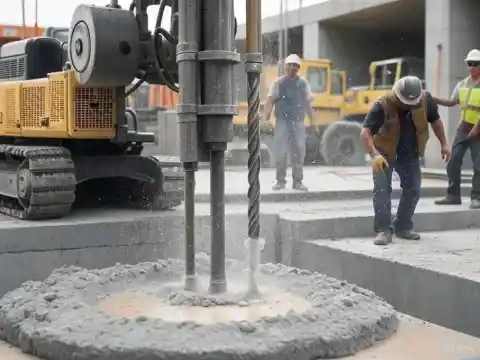
Concrete core drilling is a specialised task that requires powerful, reliable equipment for optimal results.
This comprehensive review examines the most effective concrete core drilling machines, comparing features, performance, and pricing based on user experiences.
Whether you're a professional contractor, construction worker, or ambitious DIY enthusiast, selecting the right concrete core drilling machine can significantly impact your project's success, efficiency, and overall cost.
Understanding Concrete Core Drilling Machines
Types and Applications
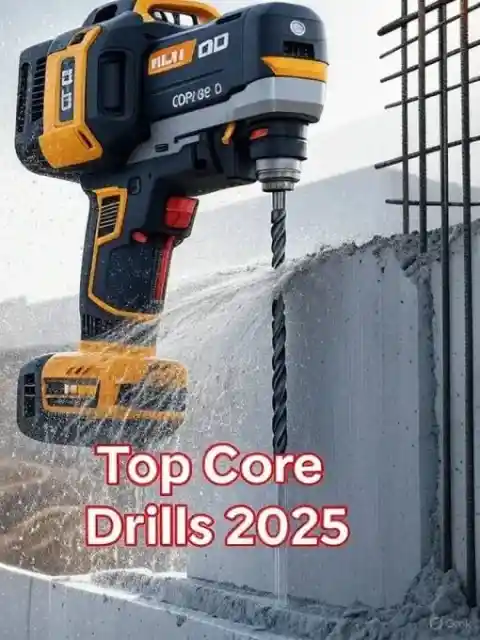
Concrete core drilling machines are specialised tools designed to create precise cylindrical holes in concrete surfaces for various applications, including plumbing, electrical installations, HVAC systems, and structural testing.
These machines generally fall into two main categories: handheld models for smaller jobs and rig-mounted systems for larger, more demanding applications.
The primary distinction in concrete core drilling technology is dry versus wet drilling methods.
Wet drilling systems use water to cool the diamond bit, extending its life and reducing dust, while dry systems are more portable but typically wear down bits faster.
Most professional-grade concrete core drilling relies on diamond-tipped bits that can effectively cut through reinforced concrete, stone, and other dense materials.
Key Considerations When Choosing
When selecting a concrete core drilling machine, several factors should influence your decision:
- Intended use and drilling frequency – daily professional use versus occasional DIY projects
- Maximum core bit diameter the machine needs to drive
- Wet or dry drilling capability, and whether a water-feed system is available
- Motor power and duty cycle, particularly for reinforced concrete
- Portability versus stability – handheld convenience against rig-mounted control
- Power source, including corded electric, battery, or hydraulic options
- Available safety features, such as anti-vibration handles and overload protection
- Budget, balanced against the likely cost of bits and replacement parts over time
Professional-Grade Concrete Core Drilling Machines
Professional-grade concrete core drilling machines are built for contractors who drill daily, often through reinforced concrete, structural steel-embedded slabs, or thick foundations. Unlike consumer-oriented drills, this class of equipment is engineered for continuous duty cycles, higher motor power, and compatibility with larger diamond core bits.
Professional machines are typically divided between rig-mounted systems, which are anchored to a base for maximum stability and torque, and handheld units, which trade some power for manoeuvrability on site. Both categories generally support wet drilling, since sustained cutting through dense or reinforced material generates significant heat that must be managed to protect the bit and motor.
Buyers in this tier expect features such as robust water-feed attachments, variable-speed gearboxes, safety clutches that disengage if the bit binds, and construction quality that can withstand years of demanding site use across multiple projects.
Heavy-Duty Rig-Mounted Systems
Rig-mounted core drilling systems attach the drill motor to a stand or rail that is anchored to the working surface using anchor bolts, a vacuum base, or a threaded rod through a pilot hole. This fixed mounting eliminates hand tremor and allows the operator to apply steady, controlled downward feed pressure, which is essential when cutting large-diameter holes or working through heavily reinforced concrete.
Rig-mounted machines are generally the most powerful category, capable of driving bits well beyond the diameters a handheld unit could safely manage, and they are the standard choice for horizontal, inclined, or overhead coring where stability is critical. The trade-off is setup time and portability: rigs are heavier, need a clear anchoring point, and are best suited to planned penetrations rather than quick one-off holes.
Handheld Professional Options
Handheld professional core drills are designed for contractors who need speed and flexibility without sacrificing too much cutting power. These machines are held and guided by the operator, making them well suited to smaller-diameter holes, awkward access points, and jobs where setting up a rig would be impractical or too slow.
Professional handheld models generally offer a step up in motor power, build quality, and duty cycle compared with entry-level DIY drills, along with two-handed grips, side handles, and depth stops for more controlled drilling. Many support both wet and dry operation depending on the attachment used. While they cannot match the raw torque or maximum bit diameter of a rig-mounted system, a quality handheld unit remains the most commonly used tool for plumbing, electrical, and HVAC penetrations on active job sites.
DIY and Semi-Professional Options
For homeowners, tradespeople who only drill occasionally, and small renovation contractors, full professional-grade equipment is often more machine than the job requires. DIY and semi-professional core drilling machines are designed to make clean, accurate holes in concrete, block, and masonry without the cost, weight, or complexity of rig-mounted systems.
This category generally favours lighter motors, simpler dry-cutting operation, and compatibility with smaller core bit diameters suited to conduit, pipe, and cable penetrations rather than structural coring. Two sub-categories dominate this space: mid-range rotary drills that accept SDS Max bits and can handle occasional core drilling alongside general hammer-drilling duties, and dedicated portable core drills built specifically for creating round holes. Both offer a reasonable balance of capability and affordability for anyone who does not need daily, heavy-duty performance.
Mid-Range SDS Max Drills
SDS Max rotary hammers occupy a useful middle ground for anyone who needs to core drill occasionally but also wants a tool for general hammer-drilling and chiselling work. These drills accept SDS Max core bit adaptors, allowing them to cut smaller-diameter holes through concrete and masonry using a rotary or rotary-hammer action rather than a dedicated core-drilling motor.
They are generally more affordable than purpose-built core drills and double as an all-purpose tool for anchor holes, pilot holes, and general demolition tasks. The trade-off is capability at the extremes: SDS Max machines are not designed for large-diameter or continuous-duty coring, and users drilling frequently or through heavily reinforced concrete will eventually outgrow them in favour of dedicated equipment.
Portable Core Drilling Options
Portable core drilling machines are purpose-built, lightweight units designed to be carried between jobs and set up quickly without a full anchoring rig. They typically pair a compact but adequately powerful motor with a simple hand-guided or lightly braced stand, making them a practical choice for one-off penetrations such as pipe or cable entry points, small HVAC ducting holes, or sampling cores for testing.
Portable options generally support smaller bit diameters than rig-mounted systems and are more commonly used for dry drilling, sometimes paired with a dust extraction attachment rather than a water-feed system. Their appeal lies in convenience: minimal setup, easy transport, and enough capability to handle the majority of everyday penetrations that DIY users and smaller trades encounter.
Price Comparison Analysis
Concrete core drilling machines span a wide price range, and understanding what that spend buys is more useful than chasing the cheapest or most expensive option by default. Budget tends to track closely with motor power, duty cycle, build quality, and included accessories such as water-feed kits, stands, or carry cases.
Occasional users drilling the odd hole for a satellite cable or waste pipe rarely need to spend at the top of the market, while contractors coring daily through reinforced concrete will find that a cheaper machine costs more in the long run through downtime, worn bits, and shorter service life. The three broad bands below reflect roughly what buyers can expect at entry-level, mid-range, and professional price points.
Entry-Level Options (£99-£300)
At the entry-level end of the market, buyers can expect compact, dry-drilling-oriented machines aimed at homeowners and occasional users. These tools generally handle smaller core diameters suited to cable and pipe penetrations, and typically arrive with a basic accessory set rather than a full water-feed or dust-extraction system.
Motor power and duty cycle are the main compromises at this price point: entry-level machines are not built for sustained, all-day use or for cutting through heavily reinforced concrete. For a single home project, a small renovation, or infrequent trade use, however, this tier usually offers reasonable value, since the reduced power is rarely a problem when the task is a handful of holes rather than a full day of continuous coring.
Mid-Range Options (£300-£550)
The mid-range band is where SDS Max rotary hammers with core-drilling capability and dedicated portable core drills tend to sit. Machines in this price range generally offer noticeably more motor power and a longer duty cycle than entry-level tools, along with better build quality and, in many cases, the option to add a water-feed attachment for wet drilling.
This tier suits semi-professional users, tradespeople who core drill several times a week rather than daily, and small contracting outfits that need dependable performance without committing to full rig-mounted equipment. Buyers at this level should weigh up bit compatibility and maximum core diameter carefully, since mid-range machines still fall well short of what a heavy-duty rig-mounted system can achieve.
Professional-Grade Options (£550-£1000+)
Professional-grade machines above roughly £550, extending well past £1000 for full rig-mounted systems, are built around continuous-duty motors, larger maximum bit diameters, and integrated water-feed and safety systems. This tier is aimed at contractors who core drill daily as part of plumbing, electrical, or structural work, and who need equipment that will hold up over years of heavy use rather than occasional projects.
The higher price reflects not just raw power but also refinements such as anti-vibration handles, electronic overload protection, and stands or rigs engineered for repeated anchoring and repositioning across a job site. For businesses that depend on core drilling for revenue, the higher upfront cost is generally offset by lower downtime and a longer working life.
User Experiences and Practical Considerations
Specifications only tell part of the story with concrete core drilling machines; how a tool performs in daily use often shapes buying decisions more than a spec sheet. Feedback from both professional operators and DIY users tends to focus on similar themes: how much control the machine offers during the cut, how well it manages heat and dust, how easy it is to source replacement bits, and whether the build quality holds up under repeated use.
Professionals and occasional users, unsurprisingly, often value different things, since a contractor's priorities around duty cycle and reliability differ from a homeowner's priorities around cost and simplicity. The two perspectives below reflect the practical considerations that tend to come up most often.
Professional Perspectives
Professional users generally prioritise reliability and consistency above almost everything else, since downtime on a job site has a direct cost. Feedback from tradespeople commonly centres on how well a machine copes with reinforced concrete, how manageable dust and water run-off are in occupied buildings, and how straightforward it is to service or replace worn components without long delays.
Weight and balance also matter more than specifications suggest, particularly for handheld models used overhead or at awkward angles for extended periods. Many professionals note that investing in a slightly more expensive machine pays off through reduced bit wear, fewer stalled cuts, and less time spent troubleshooting, which matters more over a year of regular use than it does on a single job.
DIY User Experiences
DIY users typically approach core drilling machines with a narrower set of needs: getting a clean hole for a specific job, such as running a waste pipe or cable, without a significant investment in equipment they will rarely use again. Feedback from this group often highlights ease of use, clear instructions, and manageable weight as more important than raw power or maximum bit diameter.
Dry-drilling machines tend to suit DIY users well, since setting up a water-feed system for a single hole is often more effort than the job warrants. Common lessons shared by DIY users include starting slowly to avoid bit wander, using a guide or pilot hole for accuracy, and choosing a bit diameter matched closely to the job rather than buying oversized for flexibility.
Specialized Applications
While plumbing, electrical, and HVAC penetrations account for most concrete core drilling, the same fundamental technology – cutting with a rotating diamond-tipped tube – extends into more specialised fields. Core drilling is used wherever a clean, intact cylindrical sample or precise circular opening is needed, rather than a rough or shattered hole.
Two notable examples outside general construction are geological field work, where core samples are extracted to study subsurface material, and ice drilling, where similar coring principles are adapted to extract samples from glaciers and ice sheets. Both fields borrow directly from the same core-and-bit mechanics used in construction, though the equipment is adapted for very different operating conditions and objectives.
Geological Field Work
In geology and geotechnical engineering, core drilling is used to extract cylindrical samples of rock, soil, or existing concrete structures for analysis. These cores allow engineers and geologists to examine subsurface composition, assess structural integrity, or verify the strength and consistency of concrete already in place, without the destructive impact of demolition.
The same diamond-coring principle used in construction applies here, though field equipment is often adapted for portability across uneven terrain and for extracting longer, uninterrupted samples that preserve the material's natural layering. Core samples taken this way are typically logged, labelled, and sent for laboratory testing, making the quality and consistency of the cut just as important as it is on a construction site.
Ice Drilling Applications
Ice drilling applies the same basic coring concept – a rotating hollow bit cutting a cylindrical sample – to glaciers, ice sheets, and other frozen environments, most commonly for climate and geological research. Rather than diamond bits designed for abrasive concrete, ice coring equipment is adapted for the very different demands of frozen material, including managing meltwater at the cutting face and preserving the ice core's internal structure for later analysis.
While the operating environment and equipment specifications differ substantially from construction-site core drilling, the underlying principle – using a rotating tube to extract an intact cylindrical sample rather than simply boring through material – is the same one that makes concrete coring useful for non-destructive testing and sampling.
Maintenance and Longevity Considerations
A concrete core drilling machine represents a meaningful investment, and how it is maintained has a direct effect on both performance and service life. Regular attention to a small number of components – primarily the diamond bit, the water-feed system where fitted, and the motor and gearbox – prevents most of the common failures that shorten a machine's working life.
Neglecting basic maintenance tends to show up first as reduced cutting speed and bit wear, and eventually as motor strain or gearbox damage that is far costlier to repair than routine upkeep would have been. The following considerations around bit care and overall machine durability apply broadly across handheld, portable, and rig-mounted equipment alike, regardless of price point.
Bit Maintenance and Selection
Diamond core bits are consumable items, and their condition affects both cut quality and strain on the machine itself. Bits should be inspected regularly for glazing – a smooth, shiny segment surface that cuts poorly – which can often be corrected by dressing the bit against an abrasive material to expose fresh diamond. Wet drilling generally extends bit life significantly compared with dry drilling, since water carries away heat and swarf that would otherwise wear the segments prematurely.
Selecting the right bit for the job matters as much as maintaining it: bit diameter, segment type, and bond hardness should be matched to whether the material is plain concrete, reinforced concrete, or masonry, since using a bit suited to softer material on reinforced concrete accelerates wear and increases the risk of the bit binding mid-cut.
Machine Durability
Beyond the bit itself, the durability of a core drilling machine depends heavily on how consistently it is cleaned, cooled, and stored between uses. Dust and slurry that accumulate around the motor housing, gearbox, or water-feed fittings can accelerate wear if not cleaned off after each job, and vents should be kept clear to prevent overheating during longer cuts.
Carbon brushes, seals, and water-feed swivels are common wear items worth checking periodically, particularly on machines used for wet drilling. Storing a machine in a dry, temperature-stable environment, rather than leaving it in a damp site container, also helps prevent corrosion and electrical faults over time, extending the working life of an otherwise well-built machine.
Conclusion
Choosing the right concrete core drilling machine ultimately comes down to matching the equipment to how often, and on what, it will be used. Occasional DIY jobs rarely justify the cost or complexity of professional rig-mounted systems, while contractors drilling daily through reinforced concrete need the power, duty cycle, and durability that only professional-grade equipment reliably provides.
Between these extremes, mid-range SDS Max drills and portable core drilling machines offer a practical balance for semi-professional use. Wet drilling should be favoured wherever practical for its benefits to bit life and dust control, while dry drilling remains a reasonable compromise for smaller, occasional jobs. Whichever category suits a given project, prioritising build quality, appropriate bit selection, and consistent maintenance will do more for long-term satisfaction than chasing the highest specification on paper.
Related Resources
- Best Concrete Core Drilling Machine
- Most Recommended Waterproofing Materials of Concrete
- Best Mask to Use Concrete Dust Free

Be the first to comment.