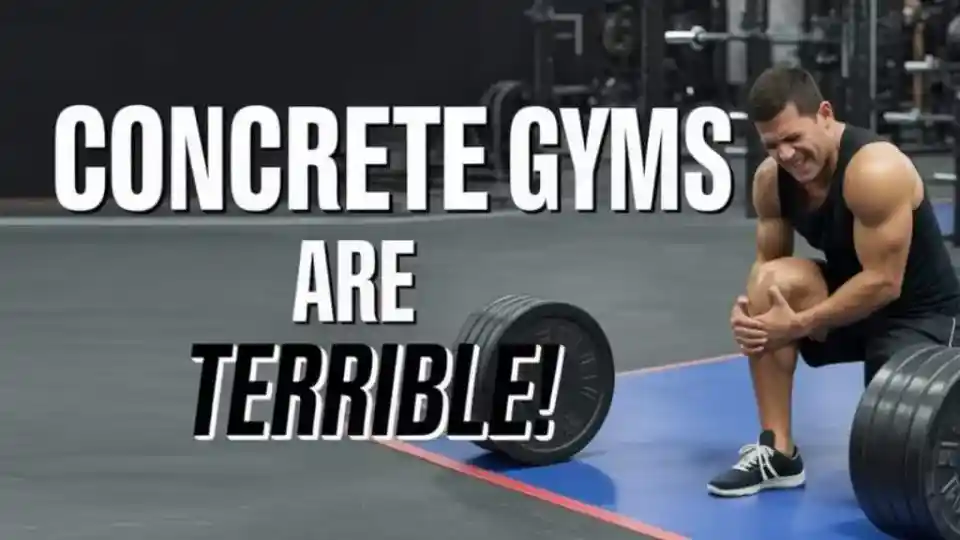
Bare concrete might seem like a practical, low-cost surface for a home or commercial gym, but it falls short in almost every way that matters once real training starts. Its unforgiving hardness absorbs none of the impact from jumping, running, or dropped weights, which puts extra strain on joints and raises the risk of injury. It also gets slippery when damp with sweat, feels cold and uncomfortable underfoot, and transmits every footstep and dropped dumbbell as a loud bang through the building.
Why Concrete Falls Short for Gym Flooring
Concrete works well as a structural floor, but it wasn't designed with training in mind. A few specific issues come up again and again when it's used as the finished gym surface:
- Hard on joints. Concrete has essentially no give, so every step, jump, or landing sends the full force of impact straight back into the ankles, knees, hips, and lower back. Over repeated sessions, this added stress can contribute to joint pain and overuse injuries.
- Slippery when wet. Sweat, spilled water, or condensation can make a smooth concrete surface surprisingly slick, increasing the chance of a slip during dynamic movements or while carrying weights.
- No shock absorption for dropped weights. Dropping a barbell or dumbbell onto bare concrete risks cracking or chipping the slab, and repeated impacts can just as easily damage the equipment itself, denting plates or weakening welds.
- Cold and uncomfortable underfoot. Concrete conducts heat away from the body quickly, making it feel cold to stand, sit, or lie on, which is a real downside for stretching, mat work, or barefoot training.
- Loud noise transmission. Footsteps, dropped equipment, and even walking across a concrete floor create sharp, carrying noise, since concrete doesn't dampen vibration the way softer materials do. In multi-story buildings or shared spaces, this can be a serious nuisance.
Better Flooring Alternatives for Gyms
Fortunately, there are several flooring options that address these problems directly, and most can be installed over an existing concrete slab:
- Rubber tiles or rolls. Rubber flooring is the standard choice for weight rooms because it absorbs shock, protects the subfloor from dropped weights, cushions joints, and reduces noise. It's also durable, easy to clean, and resistant to moisture.
- Foam mats. Interlocking foam tiles are lighter and softer than rubber, making them well suited to stretching areas, bodyweight training, and yoga or mobility spaces. They're generally not built to handle heavy dropped weights the way rubber is.
- Turf sections. Artificial turf strips are commonly used for functional training zones — sled pushes, agility drills, and similar movements — giving a stable but slightly forgiving surface that also protects the concrete underneath.
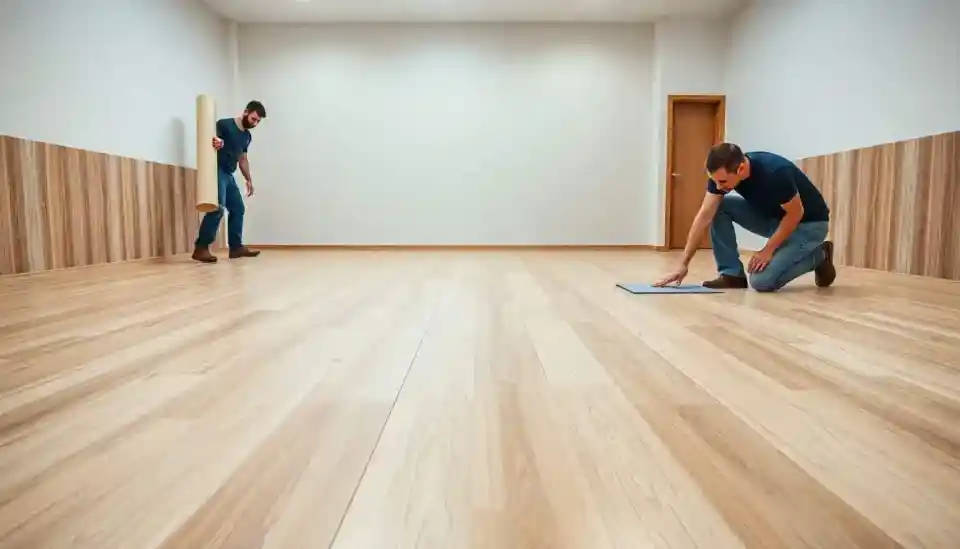
- Engineered wood over a subfloor. For studio-style spaces used for classes or light training, engineered wood flooring installed over a proper cushioned subfloor offers a more comfortable, visually finished surface with some shock absorption built in.
When Concrete Can Still Work
Concrete isn't always the wrong answer — it just shouldn't be the finished surface on its own. As a subfloor underneath rubber tiles, foam mats, or turf, concrete provides a stable, level, moisture-resistant base that these coverings can be installed over safely. For garage gyms on a tight budget, laying interlocking rubber mats or stall mats directly over the existing concrete slab is a practical, affordable way to get most of the benefits without a full flooring renovation.
Conclusion
Plain concrete is hard, slippery when wet, unforgiving on joints, and loud — all things you don't want in a space built for training. The good news is that fixing the problem doesn't require replacing the slab itself. Adding a suitable covering, whether rubber, foam, turf, or engineered wood, turns a structurally sound concrete floor into a gym surface that's safer, quieter, and far more comfortable to train on.