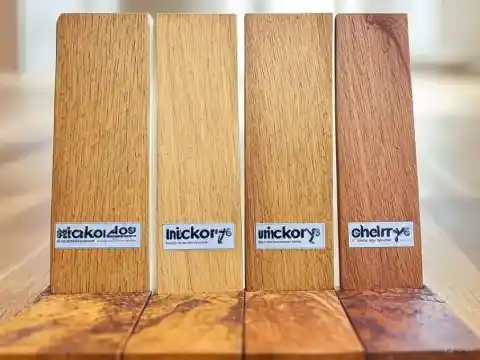
Hickory wood, known for its exceptional toughness, resilience, and distinctive rustic charm with cream-to-tan colouration and brown streaks, is highly sought after for numerous applications ranging from cabinetry and flooring to tool handles and sporting goods.
With an impressive Janka hardness rating of 1880 and a specific gravity of 0.64, this durable North American hardwood requires a reliable supplier who can provide quality materials for your woodworking projects.
This comprehensive guide will help you navigate the various options for finding reputable hickory wood suppliers throughout the United States.
Understanding the Hickory Wood Market
Hickory is a premium hardwood native to North America. It grows in trees that can reach heights of 160 feet, have 6-7 foot diameters, and have lifespans of up to 350 years.
Before beginning your search for hickory wood suppliers, it's important to understand that hickory wood pricing typically falls within the $4-8 per board foot range, which is standard for quality North American hardwoods.
However, prices vary significantly based on region, grade, and seller type, with big-box retailers generally charging premium rates compared to specialized suppliers.
Local Lumber Yards and Hardwood Specialists
Local lumber yards and speciality hardwood suppliers consistently offer the best value and selection for hickory wood compared to large retail chains. These smaller operations typically provide better quality wood at more competitive prices, with many experienced woodworkers reporting significant savings when purchasing from these specialized businesses.
Why Local Yards Outperform Big-Box Stores
The price differential between dedicated lumber specialists and big-box retailers can be substantial. For instance, some woodworkers report finding poplar (another hardwood) at $3.50 per board foot from local hickory wood suppliers compared to approximately $12 at large chain stores like Menards.
This price disparity typically extends to hickory and other hardwoods as well.
Finding Local Suppliers
Tracking down a local hickory wood supplier usually starts with a bit of legwork beyond a quick online search. Local woodworking clubs and guilds are an excellent first stop, since members often know exactly which yards in the area stock hardwoods like hickory and which ones tend to run out quickly. Cabinet shops, flooring installers, and furniture makers are also worth calling, as they buy hardwood regularly and can point you toward suppliers who consistently carry good stock.
Online business directories and lumber association listings can help you identify hardwood dealers you might not find through a general search engine. Once you have a short list, call ahead rather than showing up unannounced. Hickory is not always kept in the same volume as more common species like oak or maple, so confirming availability, thickness options, and approximate board footage in stock will save you a wasted trip.
When you do visit in person, take the opportunity to inspect boards for straightness, checking, and moisture content before committing to a purchase. A supplier that allows you to sort through their stock and answers questions about drying and storage is generally a good sign of a business worth returning to.
Direct from Sawmills and Millers
Buying hickory directly from a sawmill or independent miller is one of the most cost-effective routes available, particularly for buyers who need larger quantities or unusual dimensions. Because you are purchasing closer to the source, there is no retail markup layered on top of the price, and many mills are happy to cut boards to custom thicknesses or lengths on request.
The trade-off is that lumber bought this way is frequently sold green or only partially air-dried, meaning you may need access to a kiln or the patience to air-dry the wood yourself before it is ready for furniture or flooring work. Sawmills also tend to sell in bulk rather than by the single board, so this option suits buyers with an ongoing project or a barn, shed, or garage large enough to store and dry stock over time.
Finding a sawmill that processes hickory can take some searching, since not every mill regularly handles this species. Regional sawmill directories, agricultural extension offices, and word of mouth from other woodworkers are typically more productive than a general web search. Once you find one, building an ongoing relationship with the operator often leads to better pricing and first access to quality logs as they come through.
Benefits of Sawmill Sourcing
Sourcing hickory directly from a sawmill offers several advantages beyond price. You typically get to select individual logs or flitches, which means more control over grain pattern, color, and figure than you would have with pre-sorted retail lumber. Live-edge slabs and wider boards, which are hard to find at general lumber yards, are also more commonly available straight from the mill.
Custom milling is another benefit: many small mills will cut to the exact thickness you request rather than the standard dimensions found at retail suppliers, reducing waste on projects with specific requirements. Buying this way also supports small, local businesses and keeps the supply chain shorter, which can matter to buyers who prefer knowing where their materials came from.
The main considerations are transportation and storage. Sawmills rarely deliver small orders, so you will likely need your own trailer or truck, and you will need dry, covered storage space to season the wood properly if it isn't already kiln-dried. For buyers equipped to handle those logistics, sawmill sourcing is usually the best balance of price and quality available.
Individual Sellers and Online Marketplaces
Individual sellers represent another practical avenue, especially for smaller quantities or one-off projects. Hobbyist woodworkers occasionally sell off excess stock, tree removal and arborist services sometimes mill the logs they take down instead of hauling them to a chipper, and estate sales occasionally include stored lumber from a workshop that is being cleared out.
These sources can offer some of the lowest prices around, since sellers are often more interested in clearing space than maximizing profit. The trade-off is inconsistency: there is no standard grading, no guarantee of proper drying, and no return policy if the wood turns out to be checked, insect-damaged, or improperly stored. Buying from an individual means the responsibility for inspecting quality falls entirely on you.
It also helps to ask questions before you travel to see the wood in person. Find out how long it has been drying, where it was stored, and whether it came from a healthy tree or one that was diseased or storm-damaged. A little due diligence up front avoids bringing home lumber that looks fine but is unusable once you start working with it.
Facebook Marketplace and Craigslist
General online classifieds and social marketplace listings have become a common place to find hickory, particularly from hobbyists, small mills, and property owners clearing fallen or removed trees. Searching with a mix of terms, such as the species name alongside words like "lumber," "slab," "rough sawn," or "firewood" (since sellers do not always know they have usable lumber-grade wood), tends to turn up more listings than a narrow search.
Because these platforms have no vetting process, treat every listing with a healthy dose of caution. Ask for clear photos of the end grain and full length of the boards, confirm the wood has been drying for a reasonable period, and inspect it in person for cracks, insect activity, or embedded metal before handing over any money. Urban and salvaged trees in particular can contain nails, fencing wire, or other hardware buried in the trunk, which can damage saw blades if not caught beforehand.
Meeting in a public location, bringing a tape measure and moisture meter if you have one, and being willing to walk away from a listing that doesn't check out are all reasonable precautions. Prices on these platforms are often negotiable, so it rarely hurts to make a fair counteroffer.
Specialty Wood Retailers and Online Suppliers
For buyers who do not have good local access to hickory, national specialty hardwood retailers that ship lumber are a reliable fallback. These businesses typically stock consistently graded boards in a range of thicknesses, along with turning blanks, live-edge slabs, and smaller craft-sized pieces that are hard to justify a sawmill trip for.
The convenience comes at a cost, since shipping heavy hardwood lumber is expensive and can sometimes rival or exceed the price of the wood itself for large orders. That said, for smaller projects or when a specific grade and thickness combination is not available nearby, ordering online remains a practical solution. Reputable specialty retailers also tend to publish clear grading standards and moisture content information, which takes some of the guesswork out of buying wood you cannot inspect in person before purchase.
Woodworker's Source
Woodworker's Source is one of the longer-established online specialty hardwood retailers that regularly stocks hickory alongside a wide range of other domestic and imported species. Offerings generally include surfaced lumber in various thicknesses, turning blanks, and smaller project-sized cutoffs suited to hobbyists who don't need full board lengths.
Retailers of this kind cater to both casual hobbyists and small production shops, and they typically provide detailed descriptions of grade, moisture content, and dimensions for each listing so buyers know what to expect before ordering. As with any online hardwood purchase, it is worth comparing shipping costs against local options first, since freight charges on dense hardwood can add up quickly on larger orders.
Regional Specialty Suppliers
Hickory's availability varies considerably depending on where you are shopping. As a hardwood native to the eastern and central United States, it is most abundant and typically least expensive in and around the Midwest, the Appalachian region, and parts of the South, where the trees grow naturally and local mills process it regularly.
Buyers outside this native range, particularly on the West Coast or in the Pacific Northwest, often find fewer local suppliers carrying hickory and may pay a premium once transportation costs are factored in. In these regions, specialty hardwood importers and larger regional distributors that consolidate shipments from multiple mills tend to be the most consistent source, even though prices run higher than they would closer to hickory's native growing range.
If you live near hickory's natural range, it is worth checking with regional hardwood associations or state forestry extension offices, which often maintain lists of registered mills and dealers in the area. These regional resources can be more useful than a general web search for tracking down suppliers who specialize in the species.
Tips for Selecting Quality Hickory
Regardless of where you end up buying, a few core principles apply every time you evaluate hickory for a project. Understanding grading standards, knowing when rough-sawn stock makes sense, and being open to alternative sources can all help you get better material for less money.
Understand Grading and Pricing
Hardwood lumber is typically sorted into grades such as FAS (First and Seconds), Select, and one of several Common grades, based on the size and number of clear, defect-free cuttings that can be gotten from a board. Higher grades cost more per board foot but yield more usable clear material, while lower grades cost less and are well suited to projects where knots, mineral streaks, or color variation are part of the desired look.
Because hickory is often prized for its rustic character, character-grade or lower-grade boards can actually be a better and cheaper fit for many projects than premium clear grades. Before buying, ask the supplier to explain their grading system, since standards can vary slightly between yards, and always confirm whether pricing is quoted per board foot or per linear foot to avoid comparing costs incorrectly between suppliers.
Consider Rough-Sawn Options
Rough-sawn hickory, meaning lumber that has not yet been surfaced or planed smooth, is generally less expensive than dressed lumber and retains more of its usable thickness for projects that require significant material removal during shaping. Buying rough sawn does mean you will need access to a planer and jointer, or the willingness to pay a local millwork shop to surface it for you, but the savings can be substantial, especially on larger orders.
This option also gives you more flexibility to mill boards down to a custom final thickness rather than being limited to standard dressed dimensions like three-quarters of an inch. For buyers equipped to do their own milling, rough-sawn stock is often the most economical way to buy hickory in quantity.
Explore Alternative Sources
Beyond traditional lumber yards and mills, a few alternative sources are worth exploring, particularly for smaller projects or unique material. Reclaimed hickory from old barns, fencing, or tool handles can offer excellent character and stability, since the wood has already gone through years of seasonal movement. Urban lumber programs, where municipalities or nonprofit mills process trees removed from city streets rather than sending them to a landfill, are another increasingly common source worth checking in larger metro areas.
Cabinet shops and furniture makers sometimes sell offcuts and shorts at a discount, which can be a good fit if you need smaller pieces for handles, trim, or smaller craft projects rather than full-length boards. Keeping an open mind about where usable hickory might come from often uncovers better prices than sticking to conventional retail channels alone.
Conclusion
Finding a good hickory wood supplier comes down to knowing your options and matching them to your project's scale and budget. Local lumber yards and hardwood specialists offer convenience and the chance to inspect wood in person, sawmills and individual sellers can provide the best prices for those willing to handle their own transport and drying, and specialty online retailers fill the gap for buyers without good local access.
Taking the time to understand grading, compare pricing fairly, and consider alternative sources such as reclaimed or urban lumber will help you get quality hickory at a fair price, whether you are building furniture, flooring, tool handles, or any other project that calls for this durable, distinctive hardwood.
Be the first to comment.