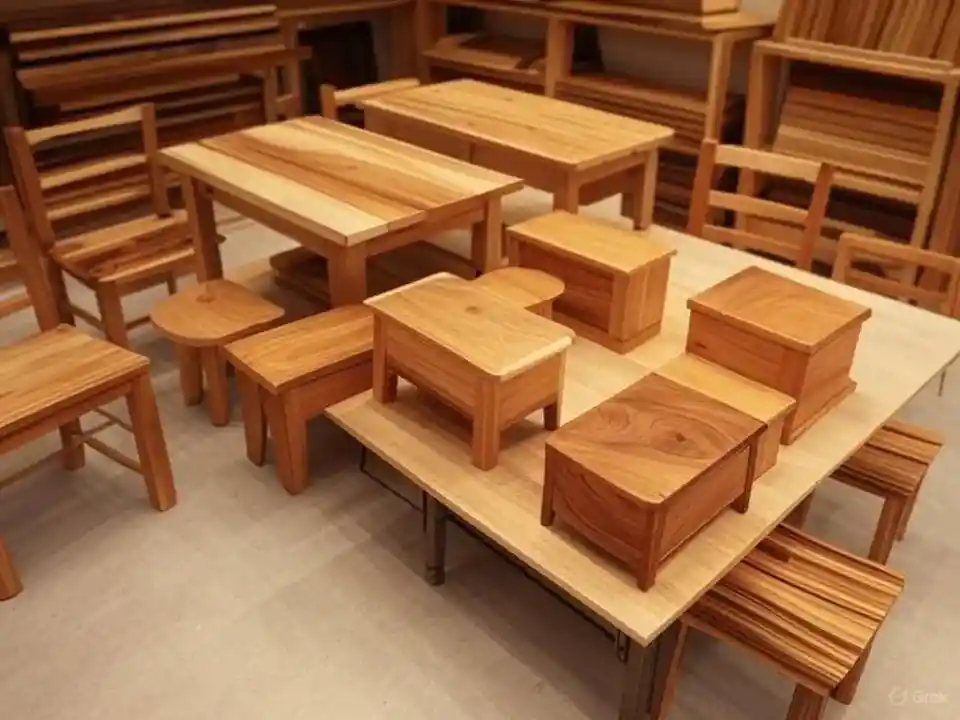
Hickory wood stands as one of the most robust and visually distinctive hardwoods available for woodworking projects today.
Known for its exceptional hardness, unique colour variations, and remarkable durability, hickory has evolved from a niche wood primarily used in rustic settings to a versatile material appearing in modern homes and diverse applications.
This comprehensive examination reveals that hickory offers both functionality and aesthetic appeal, with its natural colour contrasts and superior strength making it an excellent choice for projects requiring both beauty and longevity.
What is Hickory Wood?
Hickory has established itself as one of the hardest, strongest domestic hardwoods in the United States.
Once primarily associated with rustic log cabins and outdoor furniture, hickory has gained popularity in recent years for its distinctive appearance and exceptional durability.
The wood features a remarkable combination of light and dark colours that create one-of-a-kind pieces with natural visual interest. While traditionally less common in furniture and cabinetry due to its challenging workability, hickory has experienced a resurgence as more woodworkers and designers appreciate its unique character and unmatched strength.
The Botanical Family of Hickory
In the United States, eight wood species are classified as hickory, divided into two main groups.
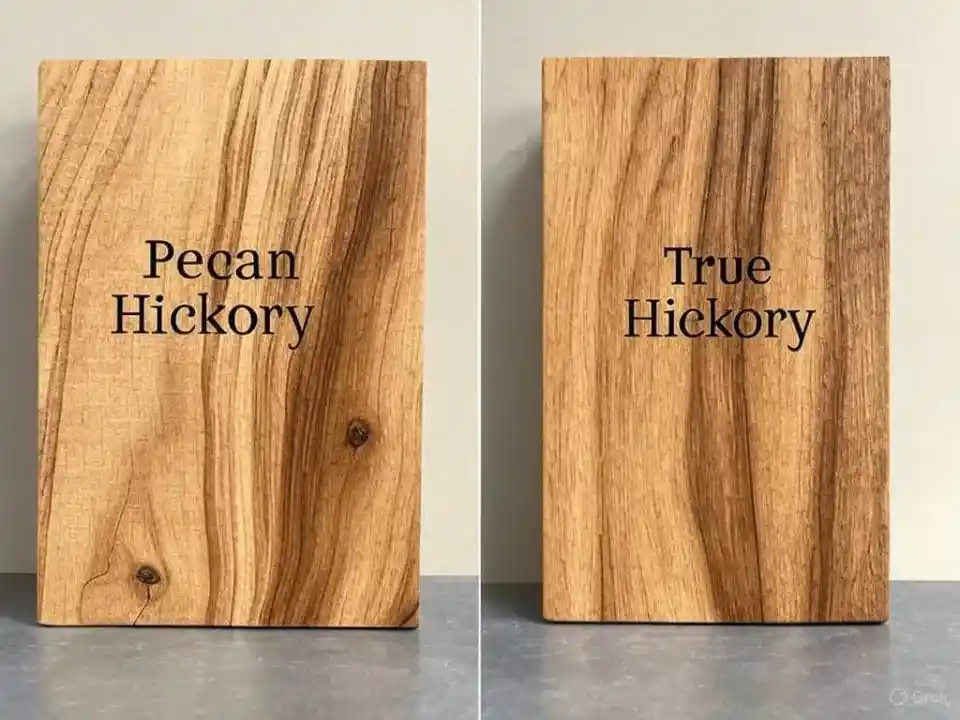
The first group consists of four pecan hickories: bitternut hickory, nutmeg hickory, water hickory, and pecan itself, the same tree grown commercially for its edible nuts. These species are generally found in bottomlands, floodplains, and river basins across the southern and central states, and their wood is typically softer and less prized for lumber than the true hickories.
The second group is made up of the true hickories: shagbark hickory, shellbark hickory, pignut hickory, and mockernut hickory. These four species supply the vast majority of commercial hickory lumber, dowels, tool handles, and flooring, because their wood shares a very similar density, strength, and colour profile. Shagbark hickory, easily recognised by the long strips of bark that peel away from the trunk, is often considered the signature species of the group, while mockernut and pignut hickory are prized for their exceptionally dense, shock-resistant wood. Because the four true hickories are so similar in working properties, lumber yards and flooring manufacturers commonly sell them together under the single label "hickory" rather than separating them by species.
Physical Properties and Characteristics
Hickory's reputation is built on a combination of physical traits that set it apart from most other domestic hardwoods. Its colour, grain, and mechanical strength all contribute to a wood that reads as rugged and rustic while still being suitable for refined furniture and flooring. Understanding these core properties helps explain why hickory performs the way it does once it leaves the sawmill and enters a workshop or job site.
Appearance and Color Profile
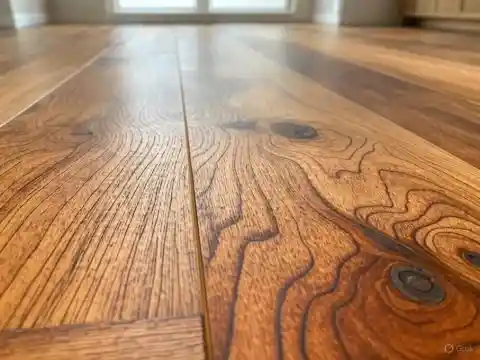
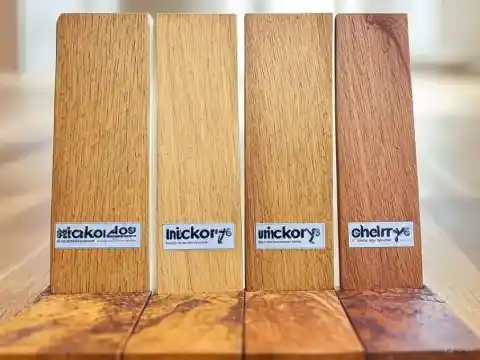
Hickory heartwood ranges from light tan to medium reddish-brown, while the sapwood is nearly white to pale cream. Because a single board often contains both heartwood and sapwood, hickory is known for dramatic light-and-dark contrast within one piece, sometimes appearing almost two-toned. This natural variation is part of what gives hickory its distinctive rustic character, and no two boards look quite the same. Manufacturers and woodworkers sometimes stain hickory to even out this contrast, though many choose to leave it natural specifically to showcase the colour variation.
Grain Pattern and Texture
The grain of hickory is usually straight, though it can occasionally be wavy or slightly irregular, especially near knots or stress points in the tree. The texture is coarse and moderately open-pored compared to fine-grained hardwoods like maple, giving the surface a bit of texture even after sanding. This coarser grain contributes to hickory's rugged, informal look and is one of the reasons it reads as a "woodsy" or rustic material even in polished, finished pieces.
Strength and Density Measurements
Hickory is widely regarded as one of the hardest and stiffest hardwoods native to North America. On the Janka hardness scale, which measures resistance to denting and wear, shagbark hickory typically rates in the neighbourhood of 1,800 pounds-force, noticeably harder than white oak or hard maple. Hickory also has excellent bending strength, stiffness, and shock resistance, meaning it can absorb sudden impacts without shattering. This combination of hardness and shock absorption is precisely why hickory has long been the preferred choice for tool handles that face repeated blows, such as axes and hammers.
Working with Hickory Wood
Hickory's strength is a double-edged sword in the workshop: the same density that makes it so durable also makes it demanding to cut, shape, and finish. Woodworkers who understand hickory's quirks around machining, drying, and finishing can avoid the most common frustrations and end up with excellent results.
Machining and Fabrication Challenges
Because hickory is so dense, it dulls blades and cutters more quickly than softer hardwoods, and it benefits from sharp, carbide-tipped tooling rather than standard steel blades. Boards with irregular or interlocked grain can tear out during planing or routing if the cutting direction is not carefully managed. Pre-drilling pilot holes before driving screws or nails is strongly recommended, since hickory is prone to splitting when fasteners are forced in without preparation. These challenges are a major reason hickory was historically used less in fine furniture than more forgiving woods like walnut or cherry.
Moisture Sensitivity and Drying Requirements
Hickory has a well-earned reputation for being difficult to dry properly. Green hickory lumber is prone to warping, checking, and splitting if it is dried too quickly, so mills typically use slow, carefully controlled kiln schedules. Hickory also has higher-than-average wood movement in response to changes in humidity, which makes proper acclimation essential before installation, particularly for flooring. Boards should be allowed to adjust to the humidity of the room they will be installed in for several days before fitting, reducing the risk of gaps or buckling later on.
Finishing Properties
Once properly sanded, hickory accepts stains, oils, and clear topcoats well, though its open pores can sometimes benefit from a grain filler if an ultra-smooth, glass-like finish is desired. Many woodworkers prefer to use a clear or lightly tinted finish that preserves hickory's natural colour contrast rather than an opaque stain that would mask it. Both oil-based and water-based polyurethanes perform well on hickory, and the wood's hardness means finished surfaces tend to resist scuffing and wear better than softer domestic hardwoods.
Daily Uses of Hickory Wood
Hickory's blend of strength and character has earned it a place in a wide range of everyday products, from the furniture in a living room to the tools stored in a garage. The sections below outline the most common categories where hickory is put to work.
Furniture Applications
Hickory has long been a favourite for rustic and traditional furniture styles, including dining chairs, tables, rockers, and cabinetry. Its strength makes it especially well suited to structural furniture components such as chair legs, rungs, and spindles that need to withstand repeated stress without cracking. As design trends have embraced more natural, textured materials, hickory furniture has also found a home in transitional and farmhouse-style interiors beyond its traditional rustic roots.
Flooring and Interior Applications
Hickory is one of the most popular domestic hardwoods for flooring precisely because of its hardness and resistance to denting from foot traffic, furniture, and pet claws. Its dramatic colour variation gives hickory floors a distinctive, rustic look that stands out from more uniform species like oak or maple. Hickory flooring is often milled with a wire-brushed or hand-scraped texture to further emphasise its rugged character, and it holds up well in high-traffic areas of the home.
Utilitarian and Tool Applications
Long before hickory became fashionable in furniture and flooring, it was prized for tool handles, including axes, hammers, sledgehammers, and hatchets, because of its unmatched shock resistance. It has also historically been used for wagon wheel spokes, ladder rails, and sporting goods such as drumsticks, thanks to its ability to flex slightly under stress without breaking. These utilitarian uses remain common today, and hickory handles are still considered a benchmark for durability in hand tools.
When to Choose Hickory Wood
With so many hardwood options available, knowing when hickory is the right call comes down to weighing durability needs, aesthetic goals, and practical budget or timing constraints against what the wood delivers best.
Project Durability Requirements
Hickory is an excellent choice whenever a project needs to withstand heavy use, repeated impact, or high foot traffic, such as flooring in busy hallways, furniture in family living spaces, or tool handles subjected to constant stress. If durability and long-term wear resistance are the top priority, few domestic hardwoods can match hickory's combination of hardness and shock absorption.
Aesthetic Considerations
Hickory is best suited to projects where its natural, high-contrast colour variation is a feature rather than a drawback. Homeowners and designers who want a rustic, organic, lived-in look tend to gravitate toward hickory, while those seeking a very uniform, monochromatic appearance may prefer a more consistently coloured wood such as maple or cherry.
Budget and Timing Factors
Because hickory is harder to machine and requires more careful, slower drying than many other hardwoods, it can involve additional labour and processing time compared to easier-to-work species. Availability can also vary by region and supplier, so it is worth checking lead times with a local mill or flooring retailer before committing to a project timeline. Buyers should weigh these practical factors alongside hickory's long-term durability, which often offsets the extra effort over the life of the finished product.
Where Hickory Wood Is Most Suitable
Choosing the right location for hickory within a home or project is just as important as choosing the wood itself. Its performance and appearance are influenced by environment, architectural style, and the specific function of the space it is used in.
Interior Environmental Considerations
Hickory performs best in interior, climate-controlled environments where humidity levels are relatively stable, since it is more prone to movement than many other hardwoods when exposed to fluctuating moisture. Proper acclimation before installation and a stable indoor climate afterward will help minimise gaps, cupping, or other movement-related issues, particularly for flooring applications.
Architectural Style Compatibility
Hickory's rugged, rustic grain naturally complements farmhouse, cabin, traditional, and craftsman-style interiors, where its character marks and colour contrast reinforce a warm, organic aesthetic. It has also found its way into more contemporary and transitional spaces, where designers use it as a textural accent against cleaner, more minimalist backdrops.
Functional Space Requirements
High-traffic, high-use areas such as kitchens, entryways, mudrooms, and family rooms benefit most from hickory's durability, since these spaces see the heaviest daily wear. Workshops and garages also make good use of hickory in the form of tool handles, workbenches, and similar functional builds where impact resistance matters more than refined appearance.
Why Choose Hickory for Your Projects
Beyond simply being a hard, strong wood, hickory offers a specific combination of practical and aesthetic advantages that make it worth considering over more common hardwood choices.
Durability Advantages
Hickory's exceptional hardness and shock resistance mean finished products resist denting, chipping, and cracking far better than softer hardwoods. This translates into flooring that holds up under decades of foot traffic and furniture that survives the bumps and knocks of everyday family life without showing premature wear.
Distinctive Aesthetic Appeal
The natural contrast between hickory's light sapwood and darker heartwood means every board carries its own unique pattern, so furniture and flooring made from hickory rarely look mass-produced or generic. Character marks such as mineral streaks and small knots add further individuality, appealing to homeowners who want their space to feel distinctive rather than uniform.
Domestic Sustainability Factors
Hickory is native to and abundant throughout the eastern United States, meaning it does not need to be imported from overseas and is generally supported by well-established domestic forestry and milling industries. Choosing a regionally available species like hickory can shorten supply chains and support local sawmills compared with imported exotic hardwoods.
Best Applications for Hickory Wood
Hickory's particular mix of strength and visual character makes it especially well suited to certain categories of projects, ranging from statement furniture to purely functional tools.
Premium Furniture Projects
Statement dining tables, accent chairs, and case pieces that showcase hickory's natural grain and colour contrast make excellent use of the wood's aesthetic strengths. Because every board looks slightly different, hickory is well suited to one-of-a-kind or small-batch furniture pieces where that individuality is a selling point rather than a liability.
Specialized Functional Applications
Workbenches, ladders, wheelbarrow handles, and sporting equipment all benefit from hickory's combination of stiffness and shock absorption. These are applications where the wood needs to survive repeated stress and impact over years of use, exactly the conditions hickory was traditionally chosen for long before it became popular in home décor.
Culinary and Specialty Uses
Hickory is one of the most popular woods for smoking meat, prized by barbecue enthusiasts for the distinctive, robust flavour its smoke imparts to foods like pork and beef. In the kitchen, hickory is also used for cutting boards and butcher blocks, where its hardness resists knife marks, though any board intended for food contact should be finished with a food-safe oil or wax.
Unique Features of Hickory Wood
A handful of characteristics set hickory apart from other domestic hardwoods, particularly when compared side by side on hardness and appearance.
Comparative Hardness Advantages
Hickory ranks among the hardest hardwoods native to North America, generally surpassing common cabinetry and flooring species such as oak, ash, and maple on the Janka hardness scale. This added hardness gives hickory a meaningful edge in any application where resistance to denting and wear is a priority, though it also means the wood is correspondingly more demanding to cut and shape.
Visual Character Elements
The interplay between hickory's pale sapwood and darker heartwood, along with occasional mineral streaks and small knots, gives the wood a distinct visual signature that is difficult to replicate with other species. Lumber is often sold in different grades, from a clear, more uniform "select" grade to a "rustic" or character grade that intentionally includes more knots, streaks, and colour variation for a bolder, more textured look.
Historical and Cultural Significance
Hickory holds a notable place in North American history and culture, well beyond its use as a building material. Indigenous peoples used hickory wood for bows, tool handles, and implements, valuing its combination of flexibility and strength, while hickory nuts served as an important food source. During the pioneer era, hickory's abundance and toughness made it a common choice for log cabins, wagon wheels, and farm tools in frontier communities across the eastern and central United States. The wood's association with toughness and resilience even extended into American political history: President Andrew Jackson earned the nickname "Old Hickory" from his troops, who considered him as tough and unyielding as the wood itself. That reputation for rugged durability has followed hickory ever since, shaping how the wood is marketed and perceived today.
Conclusion: Making Hickory Work for Your Projects
Hickory earns its reputation as one of the toughest and most distinctive domestic hardwoods through a genuine combination of strength, durability, and natural visual character. While it demands more care during machining, drying, and finishing than many other woods, the payoff is a material that resists dents, absorbs shock, and displays a colour contrast no other domestic species quite matches. Whether the goal is a statement piece of furniture, hardwearing flooring, or a tool handle built to last, understanding hickory's species, properties, and best uses makes it far easier to put this remarkable wood to work successfully.
Be the first to comment.